

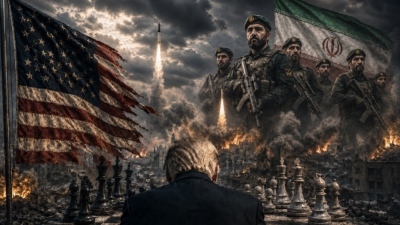
Analysts emphasize that Iran is close to altering its doctrine, ending its strategy of patience, and taking direct military action. Indeed, Mohsen Rezaei, Secretary of Iran's Supreme National Security Council, claimed Tehran is drafting a list of conditions for reopening Hormuz, stressing that the full reopening of the strait hinges on stopping the wars in Lebanon and Gaza.
Trump: We don't want to talk to Iran - Our current actions don't mean we abandoned the military option
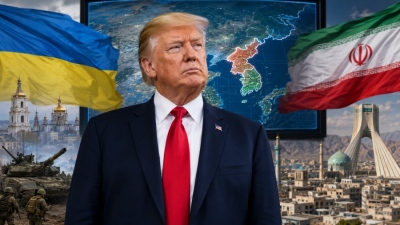
In public statements, US President Donald Trump maintained that "we do not want to talk to Iran, and we are not seeking a meeting with them." "What we are doing regarding Iran does not mean we have abandoned the military dimension," Trump said, adding: "We do not wish to talk to Iran, nor are we trying to meet them." When asked why he isn't imposing sanctions on Chinese banks doing business with Iran, he replied: "Who said I am not doing that? You don't know whether I am or not. I'm not obligated to announce everything." Later, when pressed on which world leaders he had discussed the pressure campaign with, Trump implied the matter was not on his agenda, even though Treasury Secretary Scott Bessent stated on Monday that Donald Trump was reaching out to foreign counterparts with specific requests to sever ties with the regime. "There isn't much to say," Trump stated, emphasizing: "We don't want to talk with them. The Strait of Hormuz is open.
Last night we passed 24 vessels through the strait, and we are moving ships through continuously," Trump pointed out.
Trump blasts Fox News: The Iranians are the ones begging, Hormuz is part of America
Donald Trump launched a fierce critique on his Truth Social account against Fox News following a report concerning his alleged desire to negotiate with Iran. In his post, Trump labeled the reporting by Fox News journalist Jonathan Hunt as inaccurate, asserting that, contrary to claims, he has no interest in meeting Iranian officials. The American president reiterated claims from previous days, insisting that Tehran officials are the ones begging to strike a deal. "Jonathan Hunt of Fox News delivered a highly inaccurate report regarding the Islamic Republic of Iran, which is currently collapsing. I don't want to meet with them; they are the ones who want to meet. In fact, they are begging to make a deal. Bret Baier should, for once, get his incompetent subordinates under control!" Trump posted on Truth Social. Furthermore, in a separate update on Truth Social, he again referred to the Strait of Hormuz as part of American territory—a claim that has sparked widespread criticism and ridicule in US political circles.
White House: Trump keeps "all options" on the table regarding Iran
White House Press Secretary Karoline Leavitt echoed a similar tone, emphasizing that Trump continues to keep all strategic military choices on the table regarding Iran. "We had Operation Epic Fury to dismantle their military. Now we have Operation Economic Outcast to crush their national economy," Leavitt stated during an interview on Fox News. "At this moment, no negotiations are taking place, and this will continue until the President feels they are coming to the table in a meaningful way," Leavitt said. "So far, we have not seen that."
Wall Street Journal: Trump does not seek a return to the Iran deal
The Wall Street Journal, citing informed sources, reported that the administration of Donald Trump has informed mediators it has no intention of returning to the terms of understanding with Iran. According to the report, the Trump administration has repeatedly notified intermediaries that it does not wish to reinstate the previous diplomatic memorandum. As highlighted, Trump has implemented a strict policy of economic pressure against Iran and is currently waiting to evaluate how effectively this strategy achieves Washington policy objectives. The Wall Street Journal's claim that the Trump administration opposes returning to prior terms comes amid contrasting reports suggesting the American president is still attempting, via intermediaries, to reach a diplomatic agreement with Tehran.
Hegseth (US Defense Secretary): Military strikes in the Strait of Hormuz are not ruled out
US Defense Secretary Pete Hegseth is maintaining the aggressive military stance. In public statements, he asserted that "The United States by no means excludes the possibility of military strikes within the Persian Gulf and the Strait of Hormuz."
Scott Bessent (US Treasury Secretary): Naval blockade will crush the Iranian economy
US Treasury Secretary Scott Bessent stated that the American naval blockade of Iranian ports will further weaken Iran's economy, asserting that Washington facilitated the transit of 130 million barrels of oil through the region over the last 14 days. In a post on X, Bessent wrote: "The blockade and Operation Economic Outcast will crush the collapsing Iranian economy." He added: "The US guided the export of 130 million barrels outward over the last 14 days. Iran: 0."
Foreign Policy: Iran on the verge of a strategic shift - Why Tehran might initiate military action
Foreign Policy reports that economic pressure and the naval blockade against Iran have reached a point where Tehran may conclude that continuing "strategic patience" is no longer viable, potentially driving it toward aggressive maneuvers to reshape Washington's calculations. According to the publication, Abdolnaser Hemmati, Governor of the Central Bank of Iran, stated that crude oil exports have nearly ground to a halt due to the American blockade, leaving domestic industries with 30% less foreign currency than last year. He noted that the financial situation is even more severe than during the American maximum pressure campaign executed between 2018 and 2020. Foreign Policy points out that for years, Iran countered pressure from the United States and Israel through an approach designated as "strategic patience." Tehran typically retaliated against strikes while attempting to keep its responses limited, avoiding—at least temporarily—a full-scale regional conflict. However, according to the report, this doctrine ultimately failed to prevent the war from expanding. Following strikes by the United States and Israel on February 28, which resulted in the deaths of several senior military commanders and political figures, Tehran reportedly concluded that managing pressure was no longer sufficient. In response, Iran targeted US bases and regional infrastructure while temporarily shutting down the maritime route through Hormuz.
US threatens an indefinite naval blockade
Today, the US naval blockade has generated a similar crisis atmosphere, according to the report. Pete Hegseth, the US Secretary of Defense, stated that the American Navy is prepared to maintain the blockade indefinitely. Foreign Policy argues that from Tehran's perspective, every additional day under these conditions means lost oil revenue, restricted access to foreign exchange, and severe damage to an already strained economy.
Shift in tone from Tehran
In recent weeks, several signs have pointed to a shift in Iran's overall stance. The commander of the Islamic Revolutionary Guard Corps (IRGC), upon taking office, emphasized the necessity of maximum deterrence and readiness for offensive operations. Other officials have similarly spoken about developing the operational capacity to strike inside enemy territory. A senior Iranian official speaking to Reuters reportedly warned that if diplomacy fails, Iran will move toward a fully aggressive posture, prepared to execute a swift strike to break the American blockade. Mohsen Rezaei, Secretary of Iran's Supreme National Security Council, stated that the country's defensive strategy has shifted, noting that today's Iran is fundamentally different from its pre-war state. Even economists and figures close to the political establishment, who previously advocated managing a prolonged state of neither war nor peace, are now highlighting the need for a military response.
Threat to regional energy infrastructure
A portion of Tehran's potential countermeasures directly targets regional energy networks and civilian infrastructure. Some Iranian media outlets have advocated for attacks on commercial centers and petroleum facilities in countries hosting US forces. Certain figures have also warned Gulf states that aiding American military operations would be treated as an act of war by Iran. Mohsen Rezaei warned that if regional nations participate in the American economic campaign, Iran will classify them as hostile and target their commercial interests. He added that Tehran has the capability to stop the transit of even a single drop of oil from leaving the Persian Gulf. Other reports suggest that should American military operations resume, Iran is evaluating strikes against fiber optic submarine cables in the Hormuz area.
The risk of a wider war
According to Foreign Policy, these statements do not necessarily indicate a finalized attack plan, but they demonstrate that deliberations regarding a strategy shift have intensified. Disrupting navigation or energy infrastructure could spike global oil prices and escalate political pressure on Donald Trump, particularly ahead of upcoming elections in the United States. However, taking such steps risks opening a Pandora's box. The United States could respond with broader military strikes, plunging both nations back into a state of total regional war.
Mohsen Rezaei (Iran): Full reopening of Hormuz linked to end of wars in Lebanon and Gaza
Mohsen Rezaei, Secretary of Iran's Supreme National Security Council, asserted that Tehran is drafting a list of demands for reopening the Strait of Hormuz in response to requests from international mediators. He added that the United States must take practical initial steps toward meeting these demands before the shipping lane can fully reopen. He stated that Iran has prepared conditions to be transmitted to the American side and currently permits limited, temporary passage through the central channel of the strait. He noted that the future of maritime navigation along this route depends on negotiations with Washington. Furthermore, Rezaei emphasized that ending the wars in Lebanon and Gaza, as well as the withdrawal of the Zionist regime from occupied Lebanese territory, are key conditions set by Iran for any understanding with the United States. In an interview with Al-Manar, Rezaei addressed ongoing confrontations in Lebanon and the wider region, sending greetings to the people of Lebanon regardless of their religious or political affiliation. "Among the conditions Iran sets for any understanding with the United States is the end of war across various fronts in Western Asia, particularly in Lebanon, along with the withdrawal of the Zionist regime from occupied areas." He added that remaining conditions include an end to the war in the Gaza Strip and a cessation of strikes against Syria. As he described it, the region has transformed into an interconnected chain, meaning that instability in one nation increases investment risks and limits growth opportunities across neighboring Middle East countries.
Mohsen Rezaei (Iran): We don't want war with the US, we will send Netanyahu to Hell
Furthermore, he expressed harsh positions regarding the United States and Israel. He stressed that Iran does not seek war, but in the event of renewed conflict, it is preparing for a new phase where any future war will be vastly different from previous clashes. Mohsen Rezaei explained that Iran managed the phases of the conflict incrementally: moving from avoiding targets near US bases in Gulf states to expanding its retaliatory range in later stages to include US militaryassets elsewhere. He stated this gradual approach aimed to emphasize humanitarian considerations, ensuring Iran's regional stance retained broader legitimacy and international support. He argued that the United States' pivot toward economic pressure demonstrates the limited utility of relying solely on a military operation. He warned that Tehran would counter any escalation of economic pressure with measures targeting American commercial interests throughout the region. Rezaei directly threatened Israeli Prime Minister Benjamin Netanyahu, stating: "We will send him to hell and prove that his major miscalculations have accelerated the end of the Israeli regime." He also noted that an extensive and sacred rage is building across the Islamic world against the regime, warning that it will eventually translate into direct action, fundamentally altering regional dynamics.
Vessel movement in the Strait of Hormuz drops as regional tensions persist
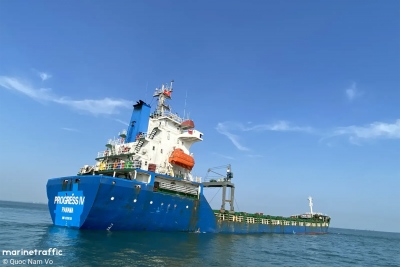
Maritime traffic through the Strait of Hormuz remained restricted on Thursday, August 27, amid ongoing friction between Washington and Tehran, according to preliminary shipping data cited by Reuters. Data from Kpler showed that only five commercial cargo vessels crossed the waterway, compared to 17 the previous day, falling well below the recent ten-day average of 15 cargo ships. Among the five vessels completing the transit were two medium-range tankers and one very large gas carrier, according to tracking details from Kpler. These numbers remain subject to revision, as some vessels routinely deactivate their automatic identification system (AIS) transponders while underway.
Mark Kelly (US Senator): Trump is struggling to find an exit strategy from Iran conflict
US Senator Mark Kelly stated that Trump is struggling to find a clear exit strategy from the conflict with Iran, telling ABC News that American citizens are bearing the cost through higher fuel prices and rising groceries. Kelly argued that the President faces a narrow set of choices: escalate by deploying ground forces—which he warned could cost thousands of American lives—withdraw entirely from the conflict, or maintain economic pressure while attempting to rebuild relations with NATO allies that have eroded over the past eighteen months. "This is a crisis of his own making," Kelly stated, adding that the President's insistence that he knows more about everything than anyone else has left him with few good options. Kelly noted that dropping bombs that, in some instances, killed innocent Iranian children was not a viable strategy. However, he added, "an economic approach combined with rebuilding our western alliances is a far better choice than simply escalating military actions or sending troops into ground combat."
www.bankingnews.gr






Σχόλια αναγνωστών